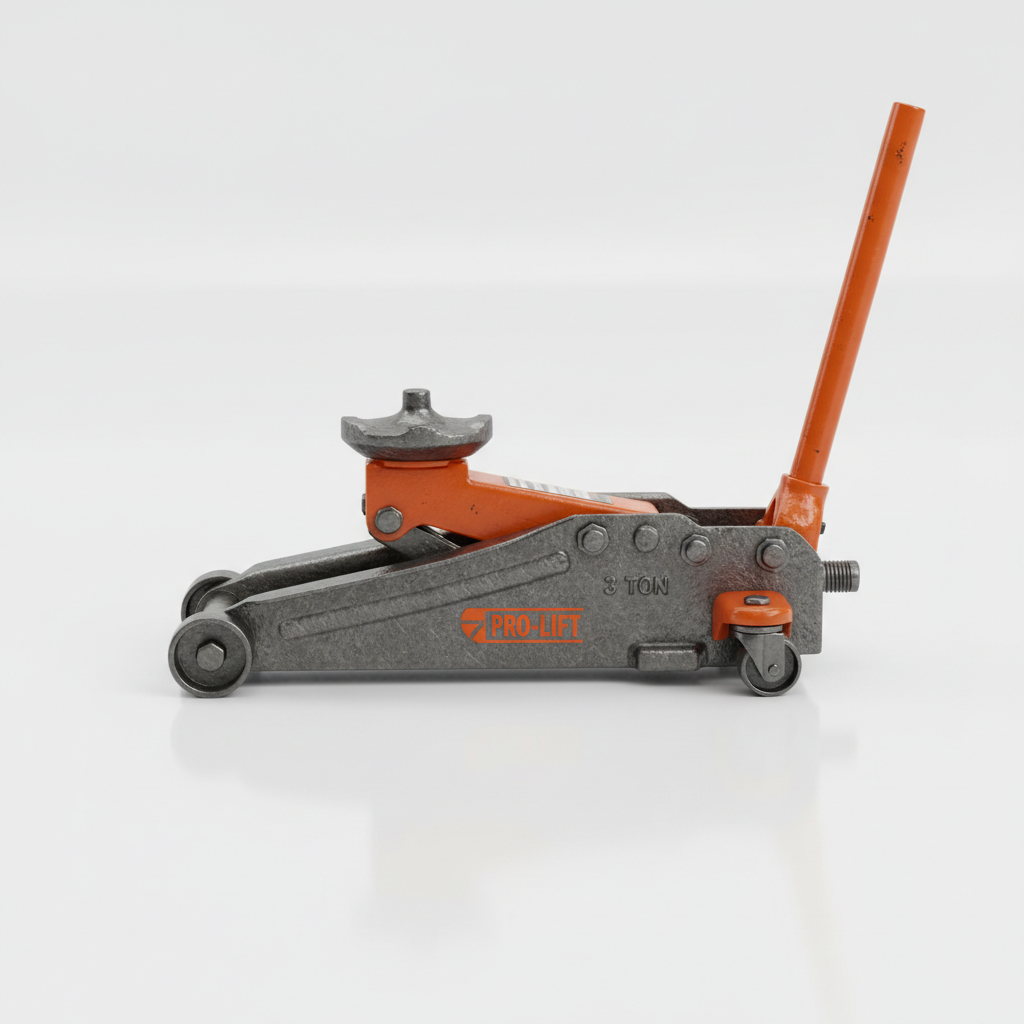
Selecting lifting equipment often feels like a trade-off between budget and safety. When searching for cheap floor jacks for sale, the primary challenge isn't finding a low price, but identifying which low-cost options maintain the structural integrity required to support a multi-ton vehicle.
The market for automotive lifting tools has expanded rapidly, with a surge in entry-level hydraulic equipment targeting home mechanics and small workshops. However, the distinction between "affordable" and "substandard" is often hidden in the grade of steel used and the precision of the hydraulic seals, which directly impact the lifespan of the tool and the safety of the operator.
Understanding the technical benchmarks of hydraulic lifting allows buyers to navigate these options without compromising security. This analysis examines the critical components of floor jacks, the risks of extreme budget sourcing, and how to balance cost-efficiency with industrial-grade reliability.

The Economics of Entry-Level Lifting Tools

The prevalence of budget-friendly lifting tools is driven by optimized manufacturing processes in regions like China. By utilizing standardized carbon steel stamping and automated hydraulic assembly, manufacturers can lower costs without necessarily sacrificing basic functionality.
However, the cost difference usually manifests in the "overhead" of the tool—the thickness of the chassis, the quality of the caster wheels, and the purity of the hydraulic fluid. For the occasional user, these differences are negligible, but for a daily-use workshop, they determine whether a tool lasts two years or ten.
Critical Engineering Components for Stability
At the core of any floor jack is the hydraulic cylinder. In professional-grade equipment, these are often honed to a mirror finish to prevent seal wear and fluid leakage. Budget options may use less precise machining, which can lead to "drift"—where the vehicle slowly lowers despite the valve being closed.
The chassis material is equally vital. While high-end jacks use reinforced alloy steel, many affordable options rely on standard carbon steel. Carbon steel is highly effective and durable, provided the gauge (thickness) is sufficient to prevent flexing under maximum load. Flexing is a primary indicator of potential failure in low-cost jacks.
Finally, the release valve mechanism dictates control. A precision-machined valve allows for a slow, controlled descent, whereas cheaper valves may act as a binary switch, causing the vehicle to drop abruptly. This is a critical safety consideration when aligning a vehicle with jack stands.
Evaluating the Risk-to-Value Ratio
When buyers search for affordable tools, they often overlook the "cost per lift" metric. A very cheap jack that fails after 50 uses is more expensive than a mid-range tool that lasts 5,000. The value proposition should be measured by the tool's ability to maintain its rated capacity over time.
The primary risk in budget lifting equipment is not immediate collapse, but gradual structural fatigue and seal degradation, which can compromise stability during critical repair tasks.
To mitigate these risks, users should prioritize tools from manufacturers who adhere to international standards such as ISO or CE. Companies like Xianxian Longge Auto Maintenance Tools Co., Ltd. integrate these certifications into their production, ensuring that even their more accessible tool lines meet established safety benchmarks.
Hydraulic Efficiency and Lift Performance
Hydraulic efficiency is measured by the effort required to achieve a specific lift height. In optimized systems, a dual-pump mechanism is often used to reach the initial lift height faster, reducing the number of strokes the operator must perform.
The following index compares the relative performance of different jack tiers based on three factors: lift speed, seal longevity, and chassis rigidity. This illustrative model helps buyers understand where budget tools typically sit compared to industrial options.
Figure 2. Performance Index by Equipment Tier
Application Scenarios for Budget Jacks
Budget floor jacks are highly suitable for "light-duty" applications. This includes home garages where a vehicle is lifted once every few months for oil changes or tire rotations. In these settings, the lack of high-end alloy steel is rarely a factor because the tool is not subjected to the constant stress of a commercial environment.
However, in a professional shop, a budget jack is better utilized as a secondary tool. For example, using a more affordable jack to initially lift a vehicle before securing it with heavy-duty jack stands or a gantry lifter reduces the wear on the budget tool and ensures that the primary weight is held by industrial-grade equipment.
Future Shifts in Garage Tooling Materials
The automotive tool industry is moving toward a hybrid approach to material science. We are seeing an increase in the use of high-tensile carbon steel combined with reinforced polymer components in non-load-bearing areas. This reduces the overall weight of the jack without sacrificing its lifting capacity.
Another emerging trend is the integration of safety-lock mechanisms into more affordable lines. Traditionally, safety locks were reserved for professional-grade jacks, but as manufacturing costs drop, these features are becoming standard across various price points.
Additionally, there is a growing demand for modularity. Tools are being designed to work in sets—for instance, combining a floor jack with a shop crane or a spring compressor—to create a comprehensive repair ecosystem. This shift allows users to invest in high-quality core tools while saving on auxiliary accessories.
Strategic Selection Framework
Choosing the right jack requires an honest assessment of your needs. If you are a hobbyist, a basic hydraulic jack is sufficient. If you run a business, the "cheap" option can become a liability if it increases downtime or creates safety hazards.
A key technical consideration is the lift range. Ensure the minimum height is low enough to fit under your vehicle's chassis and the maximum height provides enough clearance for the required repair. A jack that is "cheap" but doesn't reach the necessary height is useless.
The following framework provides a relative suitability index for different types of automotive lifting equipment based on common user profiles.
| User Profile | Budget Floor Jack | Professional Jack | Gantry Lifter |
|---|---|---|---|
| Home Mechanic | High Suitability | Over-Specified | Low Suitability |
| Part-Time Shop | Medium Suitability | High Suitability | Medium Suitability |
| Full-Service Garage | Backup Only | Essential | Essential |
| Engine Specialist | Low Suitability | Medium Suitability | High Suitability |
| Fleet Maintenance | Not Recommended | Essential | Essential |
| Mobile Repair | High Suitability | Medium Suitability | Not Recommended |
Questions & Answers
Safety is primarily determined by the quality of the steel chassis and the reliability of the hydraulic valve. A safe budget jack should be made of thick-gauge carbon steel that does not flex under load. Additionally, it must have a controlled release valve to prevent the vehicle from dropping suddenly. Always verify if the tool meets basic safety certifications like CE or ISO to ensure a minimum quality standard.
While a budget jack may claim a certain tonnage, using it for heavy-duty, long-term repairs is risky. Budget jacks are designed for intermittent light use. For heavy-duty tasks, such as engine removals or transmission work, it is safer to use a professional floor jack in conjunction with high-capacity jack stands or a specialized gantry lifter to distribute the weight more securely.
The most common signs of failure include "hydraulic drift," where the jack slowly lowers on its own, and visible flexing of the steel arms during the lift. You should also check for fluid leaks around the seals. If the handle requires significantly more effort than usual to lift the same load, it may indicate internal seal wear or air trapped in the hydraulic system.
Yes, carbon steel is the industry standard for most floor jacks. It provides the necessary strength and rigidity for automotive lifting. The key is the grade and thickness of the steel. While alloy steels are lighter and stronger, high-quality carbon steel is more than sufficient for the vast majority of automotive applications, provided it is manufactured to correct specifications.
Regular maintenance is key. Keep the chassis clean and lubricate the pivot points. Most importantly, avoid overloading the jack; using a tool at 90% of its rated capacity consistently will wear it out faster than using it at 50%. Additionally, ensure the jack is always used on a flat, hard surface to prevent uneven stress on the frame.
For those starting a workshop, a set can be cost-effective. However, buying individual tools allows you to prioritize quality where it matters most. We recommend investing in a high-quality floor jack and jack stand set first, then adding auxiliary tools like engine stands or creepers as your needs grow. This ensures that your primary safety equipment is of the highest possible standard.
Final Thoughts
Finding cheap floor jacks for sale does not have to mean compromising on safety. The key lies in understanding the application—matching the tool's capabilities to the actual demands of the job. For the home enthusiast, a budget-friendly, certified carbon steel jack is a practical and efficient choice.
For professionals, the goal should be a strategic mix: utilizing high-capacity industrial lifters for primary support and utilizing more affordable options for quick adjustments. Regardless of the price point, the integration of safety standards and regular maintenance remains the only way to ensure a secure working environment in any automotive shop.